



Shatavari: The Best Ayurvedic Herb for Women’s Health?

What is the best Ayurvedic herb for women’s health? We consider Shatavari one of the strongest traditional Ayurvedic choices for women’s wellness because it has a long history of use for female reproductive health and emerging clinical research suggests potential support for menopausal symptoms, stress and menstrual well-being. However, it should be viewed as supportive wellness care—not a cure for every women’s health condition.
Modern women are managing demanding careers, long screen hours, commuting, household responsibilities and increasingly sedentary routines. In metro cities, it is common to spend much of the day sitting at a desk, eating meals at irregular times and getting less movement than our bodies need.
Over time, these lifestyle patterns can make it harder to prioritize sleep, nutrition, physical activity and self-care.
This is where traditional wellness practices can become relevant. Among Ayurvedic herbs, Shatavari has earned a special place in women’s wellness.
What Is Shatavari?
Shatavari, botanically known as Asparagus racemosus, is a plant traditionally used in Ayurveda and other traditional systems of medicine. Its roots are the primary part used in traditional preparations.
A literature review of Ayurvedic herbal medicines describes Shatavari as an herb traditionally associated with female reproductive health and discusses its use in areas such as menopausal wellness and lactation.
Traditionally, Shatavari is valued for its nourishing and rejuvenating qualities.
It is commonly associated with:
- Women’s reproductive wellness
- Menstrual well-being
- Support during changing hormonal phases
- Vitality and nourishment
- Stress adaptation
- General women’s wellness
This traditional reputation is one reason Shatavari continues to attract interest among modern women looking for plant-based approaches to everyday wellness.
Why Is Shatavari Considered One of the Best Herbs for Women’s Health?
Calling any single herb the absolute “best” would oversimplify women’s health because every woman’s needs are different.
However, Shatavari stands out because its traditional use specifically includes women’s reproductive wellness, while emerging human research is beginning to investigate several of these traditional applications.
We can understand its popularity through several areas of interest.
1. Shatavari and Women’s Hormonal Wellness
Hormonal changes are a natural part of a woman’s life.
They can occur around:
- Menstruation
- Perimenopause
- Menopause
- Postpartum changes
- Different stages of reproductive life
Shatavari has traditionally been associated with hormonal and reproductive wellness. Recent clinical research has also examined standardized Shatavari extracts in women experiencing perimenopausal and menopausal symptoms.
This does not mean Shatavari automatically “balances hormones” in every woman. Instead, the available research suggests that certain standardized extracts may have potential benefits in specific groups, while more research is still needed.
Shatavari for Menstrual Health
Menstrual health is an important part of overall women’s wellness.
Some women experience:
- Menstrual cramps
- Changes in cycle patterns
- Mood changes around menstruation
- Fatigue
- Stress
- Changes in energy levels
Traditional Ayurveda has used Shatavari in formulations associated with female reproductive health. Research into Asparagus racemosus has also explored menstrual and reproductive outcomes, although evidence varies by condition and study design.
Therefore, rather than presenting Shatavari as a treatment for menstrual disorders, we can reasonably describe it as a traditional herb being studied for women’s menstrual and reproductive wellness.
Shatavari and Menopause Support
Menopause can bring several changes that affect everyday quality of life.
Women may experience:
- Hot flashes
- Night sweats
- Sleep disturbances
- Mood changes
- Stress
- Fatigue
- Changes in overall comfort
Clinical research is particularly interesting in this area.
A randomized, double-blind, placebo-controlled study involving 70 women reported improvements in several menopausal symptoms, including hot flashes, night sweats, insomnia, anxiety and nervousness among participants receiving the studied Shatavari formulation.
A more recent randomized, placebo-controlled study of a standardized Shatavari root extract in perimenopausal women also reported improvements in menopause-related symptom scores, perceived stress and hot flashes.
These findings are encouraging, but we should remember that studies generally evaluate specific extracts, doses and populations. Results cannot automatically be applied to every Shatavari powder, syrup or supplement.
Shatavari for Women Living a Sedentary Metro Lifestyle
Our modern lifestyle has changed dramatically.
A typical urban professional may spend hours:
- Sitting at a desk
- Working on a laptop
- Looking at a phone
- Commuting
- Skipping regular movement
- Eating meals at inconsistent times
- Working late
- Sleeping at irregular hours
A sedentary lifestyle itself is not a reason to rely on an herb. Instead, it reminds us that women’s wellness requires a whole-lifestyle approach.
We can combine traditional wellness support with practical habits such as:
- 30 minutes of regular physical activity
- Adequate sleep
- Balanced meals
- Sufficient protein and micronutrients
- Good hydration
- Stress-management practices
- Regular health check-ups
- Breaks from prolonged sitting
Shatavari can be considered one component of this broader wellness approach—not a replacement for healthy lifestyle habits.
Shatavari and Stress-Related Women’s Wellness
Women often manage several responsibilities simultaneously.
Professional deadlines, family responsibilities, financial concerns, social expectations and lack of personal time can contribute to mental and physical stress.
Some recent clinical studies of Shatavari have measured perceived stress alongside women’s health outcomes. For example, a recent perimenopause trial reported improvements in perceived stress and fatigue in the Shatavari group.
This is an interesting area of research, but we should distinguish between supporting stress resilience or wellness and treating an anxiety disorder or other mental-health condition.
Persistent or severe anxiety, depression or other psychological symptoms deserve professional medical attention.
Shatavari for Overall Women’s Vitality
Women’s health is not only about reproductive health.
We also need to consider:
- Energy
- Nutrition
- Emotional well-being
- Sleep
- Physical strength
- Healthy ageing
- Skin and hair wellness
- Reproductive health
- Healthy lifestyle habits
Traditional Ayurvedic use places Shatavari among herbs valued for nourishment and rejuvenation. Modern research is now exploring whether these traditional applications translate into measurable outcomes in specific groups of women.
This combination of traditional knowledge + emerging scientific investigation is what makes Shatavari an interesting herb for modern women’s wellness.
Shatavari vs. Other Ayurvedic Herbs for Women’s Health
Shatavari is not the only Ayurvedic herb associated with women’s wellness.
Other herbs may have different traditional roles.
| Herb | Traditional wellness focus |
|---|---|
| Shatavari | Women’s reproductive wellness, nourishment and vitality |
| Ashoka | Traditional menstrual and women’s reproductive support |
| Lodhra | Traditional women’s reproductive wellness |
| Ashwagandha | Stress resilience, energy and general vitality |
| Vidarikand | Nourishment and vitality |
| Lal Chandan | Traditional cooling and skin-related applications |
This is why a thoughtfully formulated Ayurvedic women’s wellness product may use multiple complementary herbs rather than relying on one ingredient alone.
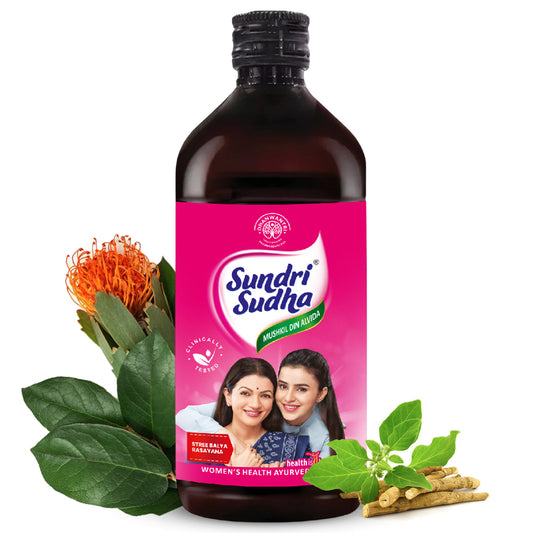
For example, Dhanwantri Pharmaceuticals’ women’s wellness formulation Sundri Sudha includes Shatavari alongside traditional herbs such as Ashok, Lodhra, Ashwagandha, Vidari Kand and other ingredients.
Why a Combination of Herbs May Be More Practical
Women’s wellness is multidimensional.
One woman may be primarily concerned about menstrual comfort, while another may be focused on energy, stress or changing needs around menopause.
A multi-herb Ayurvedic formulation can therefore be designed around a broader wellness philosophy.
This approach is more consistent with responsible health communication because no single herb should be presented as a universal cure.
Shatavari and Ayurveda: Traditional Wisdom Meets Modern Research
Ayurveda has used Shatavari for generations, particularly in traditional approaches to women’s reproductive wellness.
At the same time, modern researchers are increasingly investigating Asparagus racemosus through randomized controlled trials and scientific reviews.
Recent research has examined:
- Menopausal symptoms
- Perimenopausal wellness
- Perceived stress
- Menstrual symptoms
- PCOS-related outcomes
- Sexual wellness
For example, a 2026 randomized, double-blind, placebo-controlled trial involving women with PCOS reported improvements in perceived stress and some ovarian-related measures, although it found no significant differences in BMI or several hormonal parameters. The authors also noted the need for continued research.
This distinction matters.
Promising research is not the same as definitive proof.
We should continue to evaluate Shatavari through high-quality, larger and longer-term clinical studies.
How Can We Include Shatavari in a Healthy Lifestyle?
If we want to make Shatavari part of our wellness routine, we should think beyond supplementation.
A balanced women’s wellness routine can include:
Move More
If we work at a desk, taking short movement breaks throughout the day can help us avoid prolonged sitting.
Eat a Balanced Diet
Include vegetables, fruits, whole grains, protein sources, healthy fats and adequate fluids.
Prioritize Sleep
Consistent sleep and wake times can support overall physical and emotional well-being.
Manage Stress
Breathing exercises, yoga, meditation, walking and time away from screens can become practical daily habits.
Schedule Preventive Health Checks
Persistent menstrual changes, unusual bleeding, severe pain, unexplained fatigue or other concerning symptoms should be discussed with a qualified healthcare professional.
Use Herbs Responsibly
Traditional herbs should complement—not replace—appropriate medical care.
Shatavari and Dhanwantri Pharmaceuticals: A Legacy of Ayurveda
At Dhanwantri Pharmaceuticals, we believe traditional Ayurvedic knowledge becomes more meaningful when it is approached with responsibility, consistency and quality.
Our Ayurvedic journey dates back to 1921, giving the brand more than a century of experience rooted in traditional wellness. We continue to combine this heritage with modern manufacturing and quality practices.
Our women’s wellness approach is not based on presenting one ingredient as a miracle solution.
Instead, we focus on the traditional role of complementary herbs and responsible wellness support.
This philosophy is reflected in Sundri Sudha, our Ayurvedic women’s wellness formulation containing Shatavari along with other traditionally used herbs.
For women looking for a broader Ayurvedic approach to women’s wellness, you can explore our Ayurvedic women’s wellness support through the relevant Dhanwantri formulation.
Is Shatavari Suitable for Every Woman?
Not necessarily.
Individual health needs are different, and herbal products can vary in preparation, concentration and quality.
We recommend speaking with a qualified healthcare professional before using Shatavari or other herbal supplements if you:
- Are pregnant or breastfeeding
- Take regular prescription medicines
- Have a diagnosed medical condition
- Are undergoing hormonal treatment
- Have persistent or unexplained symptoms
- Are considering herbs for fertility or PCOS management
Most importantly, do not use Shatavari as a substitute for diagnosis or treatment when medical care is needed.
Final Thoughts: Is Shatavari the Best Herb for Women’s Health?
Shatavari deserves its reputation as one of Ayurveda’s most important herbs for women’s wellness. Its traditional association with female reproductive health, combined with emerging clinical research around menopause, perimenopause, stress and other outcomes, makes it an interesting herb for modern women.
But we should avoid calling any herb a universal solution.
Women’s health is complex, and the best approach combines:
- Nutritious food
- Regular movement
- Adequate sleep
- Stress management
- Preventive healthcare
- Responsible use of traditional herbs
- Professional guidance when symptoms persist.
