



Why Do You Feel “Not Like Yourself” Before Your Period?

Introduction
Have you ever felt unusually irritated, emotional, tired or overwhelmed just a few days before your period? Perhaps small things that normally would not bother you suddenly make you angry. You may feel like crying without understanding why, lose interest in activities you usually enjoy or struggle to concentrate on your daily responsibilities.
If this sounds familiar, you are not alone.
Many women experience emotional and physical changes in the days leading up to menstruation. These changes are commonly associated with Premenstrual Syndrome (PMS), a group of symptoms that can affect mood, energy, appetite, sleep and physical comfort.
For students, working professionals and women managing household responsibilities, these changes can sometimes make everyday life more challenging. Understanding what happens inside your body can help you respond with greater awareness rather than blaming yourself for every emotional change.
So, why do you sometimes feel like a completely different person before your period? Let's understand the connection between hormones, emotional well-being and menstrual health.
What Happens Before Your Period
The menstrual cycle involves natural hormonal changes that prepare the body for a possible pregnancy. Two important hormones involved in this process are estrogen and progesterone.
Their levels rise and fall at different stages of the menstrual cycle.
After ovulation, during the luteal phase, progesterone levels increase. If pregnancy does not occur, estrogen and progesterone levels eventually decline before menstruation begins.
These hormonal fluctuations are associated with premenstrual symptoms in some women. Researchers do not fully understand why some women experience stronger symptoms than others. However, individual sensitivity to normal hormonal changes may play an important role.
Hormones can also interact with brain chemicals involved in mood regulation, including serotonin. This may help explain why some women experience emotional changes alongside physical symptoms.
It is important to understand that feeling emotional before your period does not mean you are weak, overly sensitive or unable to manage your emotions. These experiences can have a biological component.
What Is Premenstrual Syndrome (PMS)?
Premenstrual Syndrome refers to a combination of physical, emotional and behavioural symptoms that occur before menstruation.
Symptoms generally develop during the days or weeks before a period and improve after menstruation begins. Their intensity and duration vary from woman to woman.
Some women experience mild discomfort, while others find that their symptoms interfere with work, studies, relationships or everyday activities.
Common Causes and Factors Behind Mood Changes Before Periods
There is no single explanation for why every woman experiences PMS. Several biological and lifestyle-related factors may contribute.
1. Natural Hormonal Fluctuations
Changes in estrogen and progesterone during the menstrual cycle may influence emotional well-being. Some women appear to be more sensitive to these fluctuations.
This can contribute to irritability, sadness, emotional sensitivity and sudden changes in mood.
2. Changes in Brain Chemistry
Serotonin is a neurotransmitter that plays a role in regulating mood, sleep and appetite.
Hormonal changes may influence serotonin-related activity in some women. This is one possible reason for experiencing low mood, food cravings, disturbed sleep or emotional sensitivity before menstruation.
3. Stress and Mental Pressure
Academic deadlines, workplace responsibilities, family expectations and personal concerns can affect emotional well-being.
When stress combines with premenstrual symptoms, everyday challenges may feel more difficult to manage.
4. Poor Sleep Quality
Sleep is essential for emotional balance and physical recovery.
Irregular sleeping hours, late-night screen use and insufficient rest can contribute to fatigue, irritability and difficulty concentrating. These problems may become more noticeable when premenstrual symptoms are present.
5. Unbalanced Eating Habits
Skipping meals, consuming excessive processed foods and relying heavily on sugary snacks may affect energy levels and overall well-being.
Some women also experience appetite changes and food cravings before menstruation.
6. Individual Health and Lifestyle Differences
PMS experiences can vary depending on age, overall health, existing medical conditions, stress levels and personal sensitivity to hormonal changes.
Depression, anxiety, thyroid disorders and other health conditions may also overlap with premenstrual symptoms. Therefore, persistent emotional difficulties should not automatically be attributed to PMS.
Common Symptoms and Key Points to Understand
PMS is not limited to mood swings. It can involve several physical, emotional and behavioural changes.
| Emotional Symptoms | Physical Symptoms |
|---|---|
| Sudden mood changes | Abdominal cramps |
| Irritability and anger | Bloating |
| Feeling anxious or low | Breast tenderness |
| Crying more easily | Headaches |
| Reduced concentration | Backache |
| Feeling overwhelmed | Fatigue |
| Social withdrawal | Body aches |
Emotional Changes
Some women notice that they:
-
Become irritated over small things.
-
Feel unusually emotional or sensitive.
-
Prefer spending time alone.
-
Experience sudden sadness or crying spells.
-
Find it difficult to focus on studies or work.
-
Feel less motivated than usual.
Physical Changes
Physical symptoms may include:
-
Lower abdominal discomfort.
-
Breast tenderness.
-
Bloating and fluid retention.
-
Headaches or backaches.
-
Changes in appetite.
-
Tiredness and disturbed sleep.
-
Skin changes, including acne.
Why Does It Feel Like Your Personality Has Changed?
One of the most confusing aspects of premenstrual symptoms is the feeling that you are not behaving like your usual self.
You might normally be patient but become easily irritated. You may enjoy socialising but suddenly want personal space. Even simple decisions may feel exhausting.
This experience can be influenced by the combination of emotional sensitivity, fatigue, physical discomfort and hormonal fluctuations.
Remember that these changes do not define your personality. They are experiences worth understanding, monitoring and addressing with appropriate care.
Lifestyle and Nutrition: Practical Ways to Support Yourself
Although lifestyle changes may not eliminate every PMS symptom, healthy daily habits can support general well-being and may help some women manage premenstrual discomfort.
1. Maintain a Balanced Diet
Your body needs a variety of nutrients to support normal functioning.
Include:
-
Whole grains such as oats, brown rice and whole-wheat roti.
-
Green leafy vegetables and seasonal fruits.
-
Protein sources such as dal, beans, paneer and eggs.
-
Calcium-rich foods such as milk, curd and fortified alternatives.
-
Healthy fats from nuts and seeds.
Try to maintain regular meal timings rather than skipping meals.
2. Stay Physically Active
Regular physical activity supports overall health and may help improve mood and reduce fatigue.
You do not need an intense workout routine. Consider:
-
Walking for 20–30 minutes.
-
Gentle yoga.
-
Stretching exercises.
-
Cycling or swimming.
-
Light exercise according to your comfort.
Consistency matters more than intensity.
3. Prioritise Sleep
Aim for approximately 7–9 hours of sleep each night, depending on your individual needs.
Maintain consistent sleeping and waking times. Reduce screen exposure before bedtime and create a comfortable sleeping environment.
Good sleep habits can support concentration, emotional balance and daily energy.
4. Manage Stress Through Relaxation
Emotional well-being deserves as much attention as physical health.
Try simple activities such as:
-
Deep breathing exercises.
-
Meditation for 5–10 minutes.
-
Gentle yoga.
-
Listening to calming music.
-
Spending time outdoors.
-
Talking to someone you trust.
Avoid expecting yourself to maintain the same energy level every single day.
5. Stay Hydrated
Drink sufficient water throughout the day. Staying hydrated supports normal bodily functions and can help maintain general comfort.
You can also include water-rich foods such as cucumber, watermelon and oranges.
6. Observe Your Menstrual Cycle
One of the most practical habits is maintaining a menstrual and symptom diary.
Record:
-
The first day of your period.
-
When emotional changes begin.
-
Physical discomfort and its severity.
-
Sleep patterns.
-
Food cravings.
-
Stress levels.
-
When symptoms improve.
Tracking symptoms for at least two or three menstrual cycles can help you identify patterns and provide useful information during a medical consultation.
Ayurvedic Perspective on Women's Well-Being
Ayurveda has traditionally placed importance on women's health, daily routines, balanced nutrition and overall physical well-being.
Traditional Ayurvedic approaches discuss the relationship between lifestyle, digestion, rest and the body's natural rhythms. Herbs such as Ashoka, Lodhra and Shatavari have historically been used in Ayurvedic women's health formulations.
Ashoka and Lodhra are traditionally associated with women's reproductive health, while Shatavari has a long history of use in traditional Ayurvedic wellness practices.
Ashwagandha is traditionally used in formulations intended to support general vitality and stress-related well-being.
However, traditional use and modern scientific evidence are not the same. These herbs should not be presented as clinically proven treatments for PMS, hormonal imbalance or PMDD without appropriate clinical evidence.
Ayurvedic products should also be selected carefully, with attention to ingredients, quality, suitability and possible interactions with medicines.
A balanced lifestyle, appropriate medical guidance and responsible use of traditional wellness products can be considered together rather than treating them as alternatives to one another.
Supporting Women's Wellness with Sundri Sudha by Dhanwantri Pharmaceuticals
Women's health involves more than managing individual symptoms. It includes maintaining physical comfort, nutritional balance, emotional well-being and healthy daily routines.
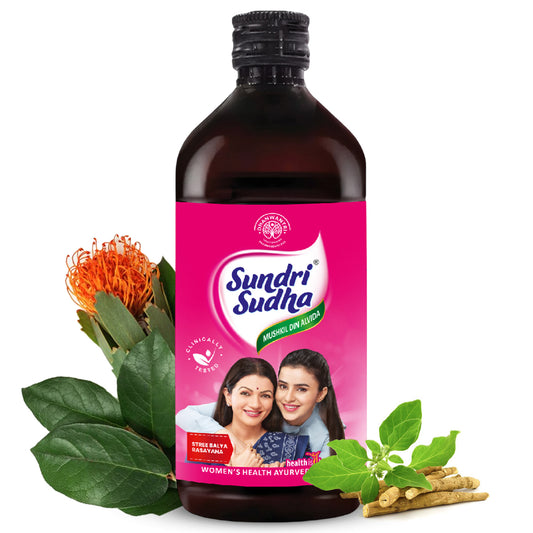
With this broader approach to women's wellness, Sundri Sudha Women's Tonic by Dhanwantri Pharmaceuticals is an Ayurvedic herbal formulation developed for women's wellness.
Traditional Herbal Ingredients
Sundri Sudha contains several herbs traditionally used in Ayurvedic wellness formulations:
-
Ashoka: Traditionally associated with women's reproductive health.
-
Lodhra: Traditionally used in Ayurvedic formulations for women's wellness.
-
Shatavari: A traditional Ayurvedic herb associated with women's health and vitality.
-
Ashwagandha: Traditionally used to support general vitality and stress-related wellness.
-
Vidarikand: Traditionally valued in Ayurvedic practices for nourishment and strength.
-
Dhai Phool: An ingredient included in traditional herbal formulations.
-
Lal Chandan: Traditionally valued in Ayurvedic preparations.
These ingredients reflect traditional Ayurvedic practices. Their presence does not establish that the finished product can treat PMS, regulate hormones, correct hormonal imbalances or resolve menstrual disorders.
Who May Consider Sundri Sudha?
Women interested in traditional Ayurvedic wellness formulations may explore Sundri Sudha after reviewing its ingredients and checking whether it is suitable for their individual health needs.
It is important to consult a qualified healthcare professional before starting an herbal tonic, especially if you are pregnant, breastfeeding, planning pregnancy, taking medication or managing an existing medical condition.
Always follow the product label for directions and recommended use. Do not discontinue prescribed treatment or delay medical consultation in favour of a wellness supplement.
The purpose of a responsible women's wellness routine is to support overall well-being while recognising when professional healthcare is needed.
Key Takeaway
Feeling unlike yourself before your period can be confusing, especially when emotional changes appear alongside physical discomfort.
However, premenstrual mood swings are a recognised experience for many women and may be associated with natural hormonal fluctuations, individual sensitivity, stress, sleep and lifestyle factors.
Instead of ignoring these changes or blaming yourself, start by understanding your menstrual cycle. Maintain a balanced diet, stay physically active, prioritise sleep and track your symptoms.
Traditional Ayurvedic wellness approaches, including formulations such as Sundri Sudha by Dhanwantri Pharmaceuticals, may be explored as part of a broader wellness routine after checking their suitability. They should not replace medical diagnosis or evidence-based treatment.
Your body deserves understanding, not judgment. Every stage of womanhood deserves care, attention and informed choices.
