



Ovarian Cysts: Symptoms, Causes, Types, and Ayurvedic Treatment Options

Introduction
Ovarian cysts are fluid-filled sacs that develop in or on an ovary. They are common among women of reproductive age, and many ovarian cysts are harmless and disappear on their own within a few months. However, some cysts can become large, persist over time, rupture, or cause the ovary to twist, making medical evaluation important when symptoms occur.
For women, understanding ovarian cysts can be especially important because changes in the menstrual cycle, pelvic discomfort, or concerns about fertility can sometimes occur alongside ovarian conditions. At the same time, having an ovarian cyst does not automatically mean that a woman will have fertility problems. The effect depends on the type of cyst and the underlying condition, if any.
This article explains ovarian cysts, their common types, contributing factors, symptoms, diagnosis, treatment approaches, lifestyle considerations, and what is currently known about the Ayurvedic perspective.
What Are Ovarian Cysts?
The ovaries are two small reproductive organs located on either side of the uterus. They play important roles in releasing eggs and producing hormones such as estrogen and progesterone.
An ovarian cyst is a sac that develops in or on an ovary. Most cysts are filled with fluid, although some may contain solid or other types of material. Many develop naturally during the menstrual cycle and disappear without treatment.
Ovarian cysts can occur in women who have regular periods as well as women with irregular menstrual cycles. They can also occur after menopause, although cysts found after menopause may require closer medical assessment because the risk of ovarian cancer is somewhat higher.
Importantly, ovarian cysts and PCOS are not the same thing. PCOS is a hormonal and metabolic condition that can involve multiple small ovarian follicles along with other features. An individual ovarian cyst is a separate condition and should not automatically be interpreted as PCOS.
Causes and Factors Associated With Ovarian Cysts
Many ovarian cysts are connected with the normal menstrual cycle.
During a typical cycle, an egg develops inside a structure called a follicle. Around ovulation, the follicle normally releases the egg. If the follicle does not release the egg or does not shrink properly afterward, it can continue to grow and form a functional cyst.
Other factors and conditions can also be associated with ovarian cysts, including:
- Hormonal changes
- Endometriosis
- Certain fertility medicines that stimulate ovulation
- Previous ovarian cysts
- Severe pelvic infections in some cases
- Pregnancy-related changes in some situations
Endometriosis can result in a particular type of ovarian cyst called an endometrioma, which develops when endometriosis-related tissue affects the ovary.
Because different types of cysts have different characteristics, identifying the cyst through appropriate medical evaluation is more useful than assuming its cause from symptoms alone.
Symptoms and Key Points to Know
Many ovarian cysts produce no noticeable symptoms and are discovered during a routine examination or imaging test. When symptoms occur, they can vary according to the size and type of cyst.
Possible symptoms include:
- Pelvic or lower abdominal pain
- A feeling of pressure or heaviness in the abdomen
- Bloating
- Pain during sexual intercourse
- Changes in menstrual bleeding
- Heavier or lighter-than-usual periods
- Irregular periods
- A frequent need to urinate
- Difficulty emptying the bowel
- Feeling full after eating a small amount
A large cyst may create pressure on nearby organs. In some cases, a cyst can rupture or cause ovarian torsion, in which the ovary twists and its blood supply may be reduced.
Ovarian Cysts and Fertility
An ovarian cyst does not necessarily prevent pregnancy. In many cases, fertility remains unaffected.
However, certain underlying conditions associated with cysts, such as endometriosis, may affect fertility. Large or complicated cysts can also require treatment that needs to be considered carefully in relation to reproductive goals.
Therefore, women trying to conceive should discuss persistent ovarian cysts with a gynecologist rather than assuming that a cyst is the direct reason for difficulty becoming pregnant.
Types of Ovarian Cysts
Ovarian cysts are broadly classified into functional cysts and pathological cysts.
| Type | General Description |
|---|---|
| Follicular cyst | Develops when a follicle does not release an egg and continues to grow. |
| Corpus luteum cyst | Develops after ovulation when the follicle closes and fluid accumulates. |
| Dermoid cyst | Develops from reproductive cells and may contain tissues such as hair or skin. |
| Cystadenoma | Develops from cells on the surface of the ovary and can sometimes grow large. |
| Endometrioma | Associated with endometriosis affecting the ovary. |
Functional cysts are generally common and often disappear naturally. Other types may require monitoring or treatment depending on their appearance, size, symptoms, age, and other medical factors.
How Ovarian Cysts Are Diagnosed
Symptoms alone cannot reliably identify the type of ovarian cyst.
A healthcare professional may consider a woman's menstrual history, symptoms, age, medical history, and physical examination. A pelvic ultrasound is commonly used to identify a cyst and assess its location, size, and appearance.
Depending on the circumstances, additional testing may include:
- Pregnancy testing
- Blood tests
- Repeat ultrasound monitoring
- Other imaging or investigations
- Laparoscopy in selected cases
The purpose of these tests is not simply to find a cyst but to understand what type of cyst is present and whether monitoring or treatment is necessary.
Lifestyle & Nutrition for Women's Reproductive Wellness
Lifestyle cannot be presented as a guaranteed way to prevent or eliminate ovarian cysts. However, maintaining general health can support overall reproductive and metabolic wellness.
Focus on a balanced diet
A varied diet can include:
- Vegetables and seasonal fruits
- Whole grains
- Pulses and legumes
- Nuts and seeds
- Adequate protein
- Healthy sources of dietary fats
- Sufficient water
Try to limit excessive intake of highly processed foods and added sugars while maintaining an overall balanced eating pattern.
Stay physically active
Regular physical activity supports cardiovascular, metabolic, and overall health. Activities can include walking, strength exercises, yoga, cycling, or other forms of movement that are comfortable and appropriate for the individual.
Maintain a healthy sleep routine
Adequate sleep and stress-management practices are important components of general women's wellness. Simple practices such as regular sleep timing, relaxation exercises, breathing practices, and taking breaks from prolonged sitting can be helpful.
These lifestyle measures should be viewed as supportive health habits, not as a replacement for evaluation or treatment of an ovarian cyst.
Ayurvedic Perspective on Ovarian Cysts
Ayurveda is a traditional Indian system of medicine with its own concepts for understanding women's health. Modern medical terminology such as "ovarian cyst" does not necessarily have a direct one-to-one equivalent in classical Ayurvedic terminology.
Some Ayurvedic research has explored ovarian cysts through traditional concepts such as Granthi and has investigated specific Ayurvedic treatment protocols. One small pilot study evaluated Virechana along with Triphaladi Kashaya and processed Guggulu in women with ovarian cysts. However, the study involved only 16 participants, with 15 completing the treatment, so its findings should not be treated as definitive evidence for all women with ovarian cysts.
Research has also investigated Ayurvedic approaches for PCOS, which is different from having an individual ovarian cyst. A 2023 scoping review found a range of Ayurvedic studies involving herbs, compound formulations, Panchakarma procedures, diet, and lifestyle interventions, but also highlighted the need for further research.
This distinction is important:
Traditional Ayurvedic use and modern clinical evidence are not the same thing.
An Ayurvedic practitioner may recommend an individualized approach based on a person's constitution, symptoms, menstrual history, and other factors. However, women with a diagnosed ovarian cyst should not use herbs or Ayurvedic procedures as a substitute for gynecological assessment.
Particular caution is important during pregnancy, while trying to conceive, after menopause, or when taking prescription medicines.
Sundri Sudha Women's Tonic: Where It May Fit
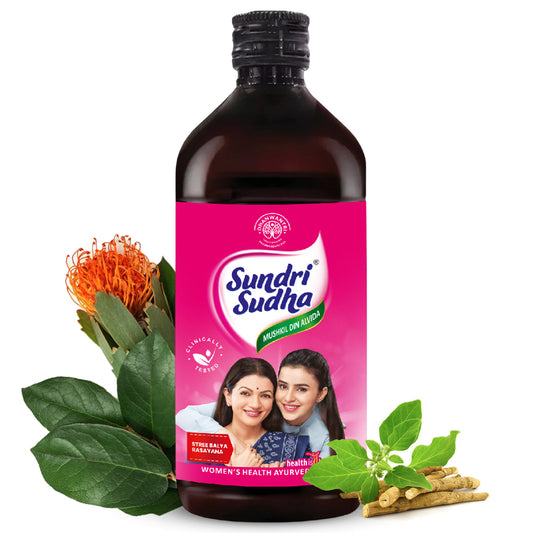
Sundri Sudha by Dhanwantri Pharmaceuticals is positioned as a women's wellness tonic supporting areas such as menstrual wellness, energy, mood, and general women's health.
The formulation includes traditionally used Ayurvedic herbs such as Ashoka, Lodhra, Shatavari, Ashwagandha, Vidarikand, and Lal Chandan.
For a woman concerned about menstrual irregularity, fatigue, or general women's wellness, a traditional herbal wellness product may be considered as part of a broader self-care routine.
There is also no basis to assume that improving general menstrual wellness will make an ovarian cyst disappear.
Dhanwantri Pharmaceuticals carries an Ayurvedic heritage dating back to 1921, and traditional herbal formulations remain part of its women's wellness approach. Nevertheless, women with a confirmed ovarian cyst should first follow the advice of their qualified healthcare professional.
Key Takeaway
Ovarian cysts are common and often harmless, particularly functional cysts associated with the menstrual cycle. Many disappear naturally without treatment. However, not every ovarian cyst is the same, and persistent or complicated cysts require appropriate medical evaluation.
Healthy nutrition, regular physical activity, adequate sleep, and stress management can support overall women's wellness, but they should not be considered a cure for ovarian cysts.
Ayurveda offers a traditional framework for women's health, and some small clinical studies have explored Ayurvedic approaches to ovarian cysts and PCOS. The evidence remains limited for making broad treatment claims, so traditional approaches should be discussed with a qualified practitioner and used responsibly alongside appropriate medical care.
For women using a product such as Sundri Sudha, the most responsible approach is to position it as a women's wellness tonic, not as a treatment for an ovarian cyst or a replacement for professional medical care.
